The Short Answer: Which Facial Add-Ons Actually Work?
LED light therapy has the most promising clinical evidence of these three options for certain skin concerns. Lymphatic drainage massage may temporarily reduce facial puffiness, while oxygen facials can provide a pleasant, hydrating experience, but evidence for lasting benefits from topical oxygen itself is limited.
That does not mean one add-on is always better than another. It depends on what you want to improve. If you are booking a facial in Toronto and wondering whether to pay extra for LED, oxygen or lymphatic drainage, start with the result you want, not the most impressive-sounding treatment name.
There is also a difference between an add-on that makes your skin look fresher immediately and one that may contribute to improvement over time. Knowing which result you are paying for makes it much easier to decide whether the extra cost is worthwhile.
Here is the practical breakdown
LED light therapy: worth considering for selected concerns, particularly inflammatory acne, when the device, treatment settings and course of treatment are appropriate.
Lymphatic drainage: most relevant when your main concern is temporary puffiness. Do not expect it to permanently sculpt your face or tighten loose skin.
Oxygen facial: may feel refreshing and leave skin looking temporarily hydrated, but claims that oxygen infusion reverses ageing or treats acne are not well established.
The best first step: choose a facial that addresses your main skin concern. Add-ons should support the plan, not distract from it.
Promising for selected concerns, but results depend on the light, device, treatment plan and skin concern.
May help the face look less puffy for a while. Evidence for lasting cosmetic changes is limited.
A pleasant facial experience is not the same as proven long-term skin improvement from oxygen itself.
First, What Is a Facial Add-On?
A facial add-on is an extra step included in, or added to, a standard facial. Depending on the treatment menu, it might involve a light-based device, a specialised serum, a massage technique or another method intended to complement the main service.
Some add-ons are designed to target a specific concern. Others are primarily about comfort, relaxation or a temporary cosmetic effect. Neither purpose is automatically wrong. The important thing is understanding what the treatment can realistically deliver.
For example, a facial that leaves your skin looking smoother immediately may be a good choice before an occasion. If you want to improve persistent acne, uneven texture or pigmentation, you need to consider whether the add-on has evidence for that particular concern, and whether a different treatment would be more appropriate.
LED Light Therapy: Does It Actually Do Anything?
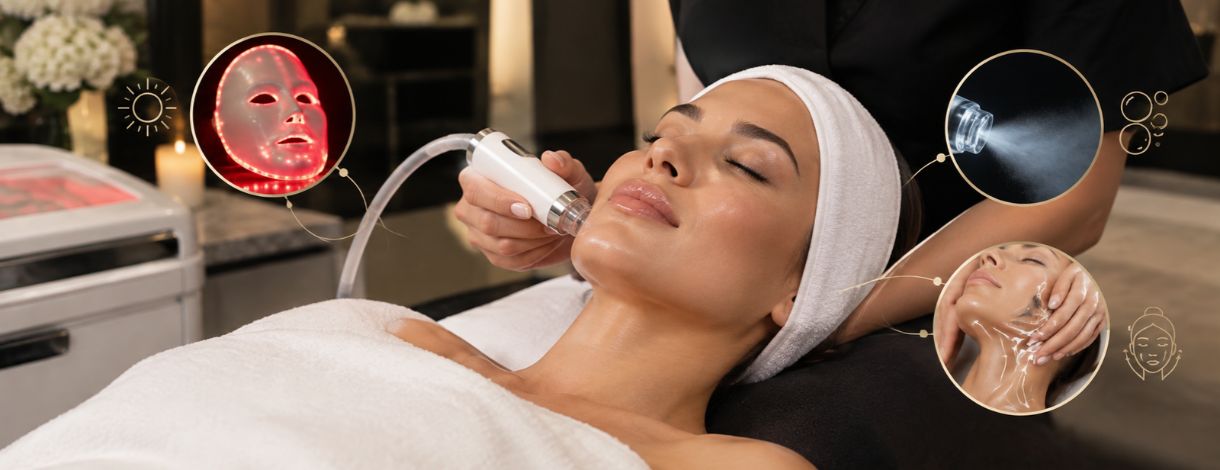
LED light therapy is the add-on I would look at first when the goal is more than a temporary glow. It uses specific wavelengths of light to interact with skin tissue. Different wavelengths are studied for different purposes, so “LED” is not one single treatment with one single result.
Red and blue light are among the most commonly discussed options in skincare. Blue light is used in some acne-focused treatments, while red light is studied for its effects on inflammation and skin rejuvenation. The exact outcome depends on the device, light parameters, dose, frequency and concern being treated.
What does the evidence say?
A 2025 systematic review and meta-analysis in JAMA Dermatology examined six randomised trials of at-home red and/or blue LED devices for mild to moderate acne. Across the included studies, LED treatment was associated with reductions in acne lesions compared with control groups. The authors also noted that the evidence came from a small number of studies and that results should be interpreted within those limitations. Read the review.
Research on LED for other skin concerns is also developing, but results vary. It would be misleading to promise that any LED session will erase wrinkles, clear every type of acne or correct pigmentation. The American Academy of Dermatology explains that light-based acne treatments can help some people, but results are variable and they do not reliably clear every type of acne on their own.
What might LED be useful for?
- Selected cases of mild to moderate inflammatory acne: red and blue LED devices have shown promising results, although they are not a universal substitute for established acne treatment.
- Supporting a broader skin-care plan: some red-light protocols are being studied for skin rejuvenation, but the evidence depends on the device and treatment protocol.
- People who want a non-invasive option: LED is generally well tolerated when used appropriately, but suitability still depends on the person and device.
What should you not expect?
LED should not be sold as an instant fix for every skin issue. It will not remove blackheads in the same way as appropriate exfoliation or extraction, and it is not a guaranteed treatment for deep acne, scarring or stubborn pigmentation.
One session may be relaxing, but studies often evaluate a series of treatments rather than a single visit. If someone is promising a dramatic, permanent change from one short LED session, ask what evidence supports that specific claim.
Professional tip: Ask which light is being used and why
A useful consultation should connect the type of LED device to your actual concern. Ask what outcome the treatment is intended to support, how many sessions may be needed and what realistic improvement looks like.
Also mention any photosensitivity, eye concerns, medications or skin conditions that could affect suitability. Follow the provider's safety instructions, including eye protection where indicated.
See a skincare treatment in action
Oxygen Facials: Do They Really Oxygenate Your Skin?
Oxygen facials are often marketed as a way to deliver oxygen and skincare ingredients to the skin, leaving the complexion refreshed, plump and radiant. The treatment may involve a device that directs a stream of oxygen, sometimes alongside a serum or other skincare products.
The experience can be enjoyable, and a serum containing effective moisturising ingredients may leave skin looking smoother or more hydrated. But it is important to separate those possible surface-level effects from the claim that oxygen delivered onto the skin produces lasting rejuvenation.
What does the evidence say?
Evidence supporting topical oxygen as a cosmetic facial treatment is limited. A systematic review of non-invasive facial rejuvenation procedures, including oxygen therapy, found that the scientific evidence available at the time was scarce and not well documented. Research into medical topical oxygen for wound care is a different area of treatment and should not be used as proof that an oxygen facial has the same effects on healthy facial skin.
In other words, evidence that oxygen-based therapies may have a role in certain wound-care settings does not establish that a cosmetic oxygen facial will stimulate collagen, clear acne or reverse skin ageing.
What might an oxygen facial do well?
- Provide a relaxing, refreshing treatment experience.
- Deliver a topical serum as part of the overall facial, depending on the method used.
- Leave the skin temporarily looking dewy or hydrated when appropriate moisturising products are used.
- Suit someone looking for a gentle facial experience rather than an intensive treatment, provided the products are appropriate for their skin.
What should you be cautious about?
Be sceptical of claims that oxygen facials permanently tighten the skin, erase wrinkles, detoxify the face or treat acne by supplying oxygen to the skin. These are stronger claims than the evidence currently supports.
If your goal is hydration, ask which serum or moisturising ingredients are being applied. If the goal is acne or pigmentation, ask whether the treatment has evidence for that specific concern rather than assuming that the word “oxygen” makes it more effective.
Is an oxygen facial worth the extra cost?
It may be worth it if you enjoy the experience and value a temporary refreshed appearance. If your budget is limited and you want to address a persistent skin concern, it is reasonable to prioritise a well-chosen facial and an evidence-informed home routine first.
Lymphatic Drainage: Can It Reduce Facial Puffiness?
Facial lymphatic drainage is a gentle massage technique intended to encourage the movement of lymph fluid through superficial lymphatic vessels. In a facial, the goal is often to reduce the appearance of temporary puffiness and leave the face looking a little less swollen.
This is different from trying to change the structure of your face. Lymphatic drainage does not remove facial fat, permanently reshape your jawline or reliably tighten loose skin.
What does the evidence say?
Lymphatic drainage has recognised medical uses in managing certain types of swelling, including lymphoedema, but that does not mean the evidence automatically applies to cosmetic facial massage in otherwise healthy people.
For facial depuffing in healthy adults, controlled research is limited. A temporary improvement in the appearance of puffiness is plausible, but strong evidence for lasting facial sculpting, collagen production or dramatic skin rejuvenation is lacking.
When might it make sense?
- Temporary morning puffiness: some people notice facial swelling after sleep or other everyday factors. Gentle massage may temporarily change the appearance of fluid-related puffiness.
- A relaxing facial experience: the gentle, rhythmic technique may be enjoyable in its own right.
- When the goal is subtle and temporary: it may suit someone who wants to look a little less puffy for an occasion without expecting a permanent change.
What it cannot reliably do
It cannot permanently remove a double chin, dissolve fat, change bone structure or provide a lasting facelift. Claims about “flushing toxins” should also be treated cautiously. The lymphatic system has a real physiological role, but cosmetic massage is not a general detox treatment.
If facial swelling is new, persistent, painful or unexplained, do not assume it is simply fluid that needs draining. Seek appropriate medical advice. Avoid facial massage over an area with an active infection or unexplained swelling unless a qualified healthcare professional has advised that it is appropriate.
LED vs. Oxygen vs. Lymphatic Drainage: Side-by-Side
Here is the practical comparison if you are deciding which facial add-on to choose.
| Add-on | Main purpose | What it may realistically help with | Evidence for cosmetic claims | Best way to think about it |
|---|---|---|---|---|
| LED light therapy | Uses specific wavelengths of light to interact with skin tissue. | Selected concerns such as mild to moderate inflammatory acne, depending on the device and protocol. | Promising for certain uses, but results are not universal and research varies by concern. | A potentially useful addition when selected for a specific skin goal. |
| Oxygen facial | Often combines an oxygen stream with topical skincare products. | A refreshing treatment experience and possibly temporary surface hydration from the products used. | Limited evidence that oxygen itself creates lasting cosmetic improvements. | Think comfort and temporary glow, not a proven anti-ageing treatment. |
| Lymphatic drainage | Gentle massage intended to encourage lymph fluid movement. | Potential temporary reduction in the appearance of puffiness. | Limited direct evidence for lasting cosmetic benefits in healthy faces. | Think temporary depuffing and relaxation, not permanent sculpting. |
Evidence is specific to the treatment method, device, outcome and population studied. These categories are not interchangeable, and an add-on's results cannot be guaranteed.
Which Facial Add-On Should You Choose for Your Skin Concern?
The best choice starts with the problem you want to solve. “I want glowing skin” is a useful starting point, but it is not specific enough to select the right treatment every time.
| Your main concern | What to consider | Important limitation |
|---|---|---|
| Inflamed pimples | LED may be worth discussing as part of an acne-focused plan. | It may not clear acne on its own. Persistent or severe acne may need medical treatment. |
| Morning puffiness | Gentle lymphatic drainage may offer a temporary cosmetic improvement. | It does not address every cause of facial swelling or permanently reshape the face. |
| Dry, tight-feeling skin | Prioritise a facial with suitable moisturising ingredients and a supportive home routine. | Oxygen delivery itself is not proven to be the key benefit. |
| Dull-looking skin | Consider the underlying cause and whether gentle exfoliation or hydration is more relevant. | No single add-on guarantees a lasting glow. |
| Fine lines and skin ageing | Discuss options with evidence appropriate to your concern, alongside daily sun protection. | Do not expect an oxygen facial or one LED session to erase established lines. |
| Blackheads and clogged pores | Look at a facial designed around congestion and appropriate exfoliation. | LED, oxygen and lymphatic drainage are not interchangeable with pore-focused care. |
| Uneven pigmentation | Choose an approach based on the type and cause of the pigmentation. | Some pigmentation can worsen with irritation; professional assessment may be needed. |
If you are unsure where to start, our skin concerns page can help you explore common concerns, and our article on choosing the right facial offers another starting point.
Try the Facial Add-On Selector
Choose your main goal below. This tool gives you a starting point for a conversation with your skincare professional, it is not a diagnosis or a guarantee of results.
Which Add-On Fits My Goal?
Select the result you care about most.
Do You Need an Add-On at All?
No, and this is worth remembering when you are comparing facial menus.
A well-chosen core facial may be more useful than adding several extras that do not match your skin's needs. Cleansing, appropriate exfoliation, moisturising products and a treatment plan suited to your skin can be more relevant than stacking every available option onto one appointment.
For example, if your main concern is clogged pores, you would want to understand the facial's approach to congestion before paying extra for lymphatic drainage. If you want to manage inflammatory acne, a suitable treatment plan matters more than a promise of instant radiance.
Choose the core facial first
Ask what the main treatment is intended to address, which products or techniques it uses, and whether it suits your current skin condition.
Add only what supports your goal
An extra step should have a clear purpose. You should be able to explain why you are adding it and what a realistic result would look like.
At Deco De Mode, you can explore our facial treatment options, including our customized facial and HydraFacial treatments. The most appropriate option depends on your skin concerns, sensitivity and goals.
What About HydraFacial? Is That an Add-On?
HydraFacial is a facial treatment in its own right rather than simply another name for LED, oxygen or lymphatic drainage. It uses a device-based approach to cleansing, exfoliation and removing impurities while delivering topical skincare solutions, depending on the treatment selected.
People often compare HydraFacial with add-ons because they are looking for the same broad outcome: smoother-looking, refreshed skin. But they are different treatments, and the right comparison depends on the concern you want to address.
If you are mainly concerned about congestion, blackheads or a dull surface, it makes sense to compare treatments designed around cleansing and exfoliation. If temporary puffiness is the issue, lymphatic drainage has a different purpose. If you are considering LED for acne, look at the evidence for the specific light treatment rather than assuming every facial device works the same way.
See our HydraFacial treatment details to understand the options available at our Toronto locations.
Watch: HydraFacial treatment
How to Get More Value From a Facial in Toronto
Toronto's changing seasons can affect how your skin feels. Cold outdoor air and indoor heating in winter may leave some people feeling drier, while summer humidity, sweat and sunscreen can change how their skin feels day to day. Your skin's needs can also change with products, stress, hormones and other factors.
That does not mean you need a different add-on every season. It means your facial should be chosen based on your skin's current condition rather than a fixed trend.
- In winter: if your skin feels dry or tight, discuss moisturising products and whether exfoliation should be adjusted.
- In summer: if you are dealing with congestion, sweat or sunscreen build-up, ask about an appropriate cleansing and exfoliation approach.
- Before an event: be cautious about trying a new intensive treatment right before an important occasion. Even gentle treatments can cause unexpected irritation.
- Throughout the year: daily sunscreen and a consistent home routine remain important, regardless of which add-on you choose.
If you are dealing with persistent acne, rosacea, unexplained redness or pigmentation that is changing, a cosmetic facial may not be the right first step. A qualified healthcare professional can help determine whether you need a medical assessment.
A look at a facial treatment
Questions to Ask Before Paying for an Add-On
You do not need to know all the technical details to make a good decision. A few straightforward questions can help you understand what you are paying for.
- What concern is this add-on intended to address? Look for an answer specific to your skin rather than a promise that it does everything.
- What result is realistic after one session? Ask whether the expected effect is temporary or whether a course of treatments is usually considered.
- What evidence supports this particular treatment? Evidence for one LED device or protocol does not automatically apply to every device.
- Is it suitable for my skin right now? Mention sensitivity, active irritation, skin conditions, medications and any relevant medical history.
- Would another step be more useful? Sometimes the best recommendation is a different core facial or a simpler routine.
The best treatment is not always the one with the most extras
A good skincare professional should be able to explain the purpose of a treatment, its limitations and when it may not be appropriate. You should feel comfortable asking questions and declining extras that do not fit your goals.
Frequently Asked Questions
Of these three, LED light therapy has promising clinical evidence for selected uses, particularly mild to moderate inflammatory acne with appropriate red and/or blue light devices. Evidence varies by concern and protocol, so it is not a guarantee of results or a replacement for every standard treatment.
Do not expect a dramatic or permanent change from one session. Studies often examine repeated treatments over several weeks, and results depend on the device and skin concern. Ask the provider what outcome is realistic for the particular treatment they offer.
They may be worthwhile if you enjoy the experience and want a temporary refreshed or hydrated appearance. However, evidence that oxygen delivered onto the skin creates lasting anti-ageing or acne benefits is limited. Consider the products used and the actual result you want before paying extra.
It may temporarily reduce the appearance of fluid-related puffiness in some people, making the face look a little less swollen. It does not remove facial fat, change bone structure or permanently sculpt the jawline.
Some treatment plans combine different facial technologies, but suitability depends on the products, device, your skin condition and the treatment sequence. Ask your provider whether the combination is appropriate for you rather than assuming more steps will produce better results.
There is no single best option for every sensitive skin type. The right choice depends on what causes your sensitivity and whether your skin is currently irritated. Discuss your symptoms, products and relevant medical history with a qualified professional before adding a treatment.
No. An add-on is not a substitute for a routine suited to your skin, including appropriate cleansing, moisturising and sun protection. Persistent acne, significant pigmentation or ongoing irritation may require advice from a healthcare professional.
Start with your main concern, such as congestion, dryness, dullness or acne. Compare the purpose of the core facial first, then ask whether an add-on has a clear role. You can explore the facial options at Deco De Mode Toronto and discuss which service best fits your goals.
Not Sure Which Facial Is Right for Your Skin?
Start with your main concern rather than choosing every available add-on. Explore our facial treatments and learn more about the options available at Deco De Mode Toronto in Yorkville.
Explore Facial TreatmentsSources & Further Reading
- Ershadi S, Barbieri JS. At-Home LED Devices for the Treatment of Acne Vulgaris: A Systematic Review and Meta-Analysis. JAMA Dermatology, 2025.
- American Academy of Dermatology. Lasers and lights: How well do they treat acne?
- Pryor LD et al. Dermaplaning, topical oxygen, and photodynamic therapy: a systematic review of the literature. Aesthetic Plastic Surgery, 2011.
- Wei Y et al. Topical oxygen therapy and singlet oxygen in wound healing: A scoping review. International Wound Journal, 2024. This concerns wound-care research, not proof of cosmetic oxygen facial benefits.
- ABC News: What is a lymphatic drainage facial and do they work?
- Deco De Mode Toronto: Customized Facial
- Deco De Mode Toronto: HydraFacial
This article provides general skincare information, not medical advice. Research findings may not apply to every device, product or individual. If you have persistent acne, unexplained swelling, a skin condition or a concern about treatment safety, consult an appropriately qualified healthcare professional.